Oaxaca, Mexico Travel Guide : Things to Do, Food & Tips
Oaxaca de Juárez is one of the most interesting cities in Mexico for food, culture, street art and exploring on foot.
Located in southern Mexico, Oaxaca is the capital of the state of Oaxaca and a great base for exploring the surrounding region. The city is particularly famous for its food and mezcal, but there is much more to discover, from colorful neighborhoods and markets to archaeological sites and spectacular natural landscapes.
For us, Oaxaca was also the beginning of our journey toward the Pacific coast.
We visited around Easter, which turned out to be a particularly interesting time to be in the city because of the Holy Week traditions and religious processions.
If you are into travel stories, though, read our diary at the end of this post.

First Impressions
Oaxaca, as you will notice further below, is the food capital of Mexico.
But it also has some interesting Holy Week traditions, so we thought it would be perfect to visit around Easter.
The first evening in Oaxaca, we simply walked around the city and ate at Boulenc.
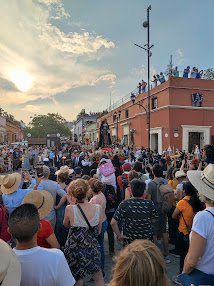
Later, we observed the Procession of Silence because it was Good Friday.
It was a great introduction to the city and immediately showed us that Oaxaca is much more than just a place to stop for food.
The city center is easy to explore on foot, the streets are full of cafés and restaurants, and once you move beyond the center you find neighborhoods with a completely different atmosphere.
And, of course, there is the food. During our stay we tried tlayudas, memelas, mole negro, pozole, chocolate drinks, pan de yema, pan de cazuela and mezcal. We definitely didn’t manage to try everything, but we quickly understood why Oaxaca has such a strong reputation as a food destination.

Where is Oaxaca, Mexico?
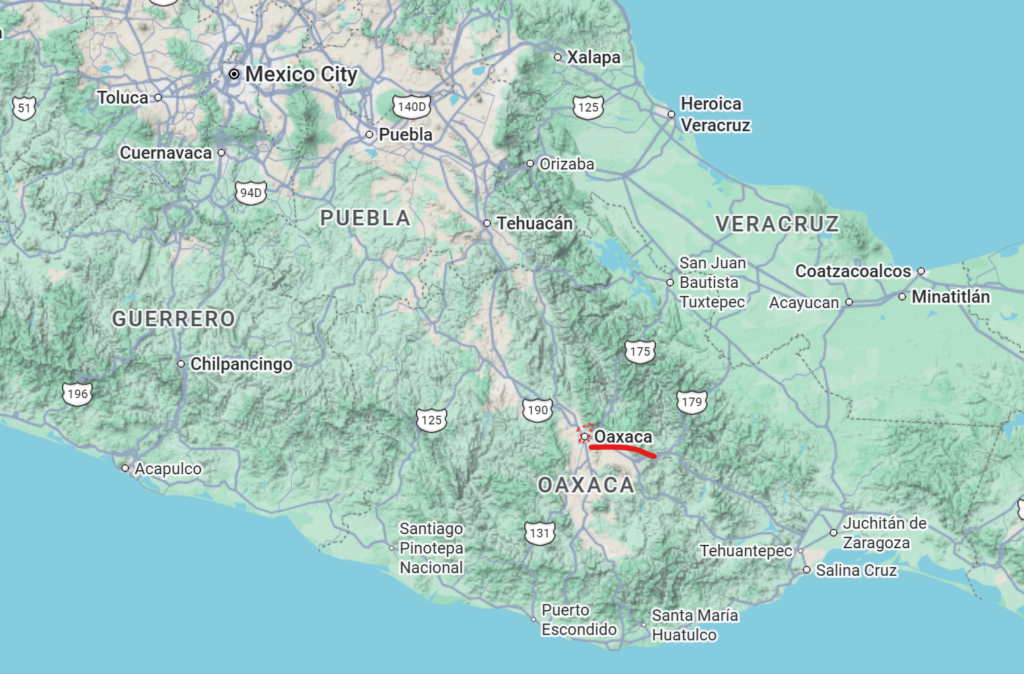
Oaxaca de Juárez is the capital of the Mexican state of Oaxaca in southern Mexico.
The city is located inland, surrounded by mountains, and is well connected to other destinations in the state.
Oaxaca is also an excellent base for exploring the Central Valleys and the surrounding region. The official Oaxaca tourism site highlights routes and attractions including Santa María del Tule, Teotitlán del Valle, Mitla and Santiago Matatlán, all of which are part of the region’s cultural and mezcal heritage.
From Oaxaca you can also continue toward the Pacific coast, including destinations such as Zipolite, Mazunte and Puerto Escondido.
We used Oaxaca as exactly this kind of starting point before heading toward the coast.
Why visit Oaxaca?
Food
If you enjoy Mexican food, Oaxaca deserves a place on your itinerary.
The region is famous for dishes such as tlayudas, mole and memelas, as well as chocolate and mezcal.
We spent a considerable part of our time simply trying different foods and drinks.

Mezcal
Oaxaca is strongly associated with mezcal.
The official Oaxaca Mezcal Route connects places such as El Tule, Teotitlán del Valle, Mitla and Santiago Matatlán, where visitors can learn more about the production and culture surrounding mezcal.
We visited a mezcal distillery ourselves and learned how agave is transformed into mezcal.
Colorful neighborhoods
You don’t need a sightseeing tour to enjoy Oaxaca.
Some of our favorite moments came simply from walking around Centro, Jalatlaco and Xochimilco.
Jalatlaco in particular has beautiful cobblestone streets, cafés and plenty of street art.

Markets
The local markets are another important part of the Oaxaca experience.
They are a great place to try local food and drinks and to see more of everyday life in the city.

Day trips
There is plenty to see outside Oaxaca itself.
During our stay, we visited El Tule, Mitla and Hierve el Agua, as well as a local farm where we learned about natural dyes and chocolate and a mezcal distillery.
Best 10 things to do in Oaxaca
1. Explore Centro
Start with the historic center.
Oaxaca’s center is very easy to navigate because of its squared, grid-like layout.
Walk around the streets, explore the Zócalo, visit the markets and stop whenever you see an interesting café or shop.
We spent a lot of time simply walking around.

2. Explore Jalatlaco
Jalatlaco was one of our favorite neighborhoods.
The cobblestone streets, colorful buildings, cafés and street art make it a great area for walking around without a specific plan.
We had breakfast there and discovered several cafés along the way.

3. Explore Xochimilco
Xochimilco is another neighborhood worth exploring on foot.
Together with Centro and Jalatlaco, it gives you a good feeling for the different sides of Oaxaca.

4. Eat at La Cosecha Oaxaca
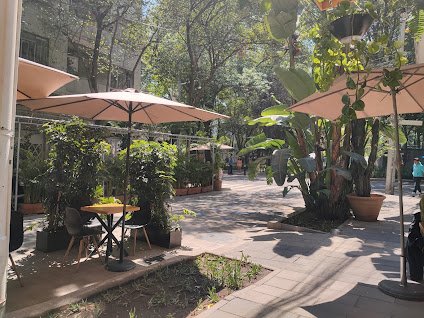
One afternoon we went to La Cosecha Oaxaca, an open-air food market.
We ate a tlayuda and memelas and tried agua fresca and pozonte.
It was one of our favorite ways to experience Oaxaca’s food culture.
5. Try mole and pozole
At Cabuche we tried local specialties including mole negro and pozole.
If you come to Oaxaca, don’t limit yourself to tacos.
There is an enormous variety of regional food to discover.

6. Visit El Tule
El Tule is home to the famous Árbol del Tule, an enormous Montezuma cypress.
It is one of the highlights along the official Mezcal Route, which also includes Teotitlán del Valle, Mitla and Santiago Matatlán.
We visited it during our day trip outside Oaxaca.

7. Explore Mitla
Mitla is an ancient Zapotec archaeological site known for its distinctive geometric stone decoration.
We visited it during our day trip and enjoyed learning more about the history of the region.
Mitla is also one of the main stops on the official Oaxaca Mezcal Route.
8. Visit Hierve el Agua
Hierve el Agua was another highlight of our day trip.
Despite the name, these aren’t actual waterfalls. The spectacular formations are petrified waterfalls created by mineral-rich water. The site also has natural pools overlooking the formations.
The surrounding mountain landscape makes the experience even more impressive.

9. Visit a mezcal distillery
Mezcal is one of the things Oaxaca is most famous for, so visiting a distillery is a great way to understand where it comes from.
We visited El Rey de Matatlán, where we learned how agave is transformed into mezcal.
It was interesting to see the process rather than simply ordering a mezcal in a bar.
10. Try as much Oaxacan food as possible
Honestly, this deserves to be an activity on its own.
Have a tlayuda.
Try memelas.
Drink chocolate.
Try atole.
Eat mole.
Have pan de yema.
Try mezcal.
And then do it all again somewhere else.

Where to stay in Oaxaca
Oaxaca is a very walkable city, so location matters mainly because it determines how much you’ll need taxis.
We recommend staying within roughly six blocks of the Zócalo or Calle Macedonio Alcalá if you want to explore mostly on foot.
This puts you close to restaurants, cafés, markets and many of the main sights.
Centro
The historic center is the most convenient option if you want to walk everywhere.
You’ll have plenty of restaurants and cafés nearby and can easily explore the city on foot.

Jalatlaco
Jalatlaco is another attractive option.
It has a quieter, more residential atmosphere while still being close enough to the center.
It was one of the areas we particularly enjoyed walking around.

Safety
According to our local guide, the southwest part of the city farther away from Mercado 20 de Noviembre was not considered particularly safe.
As always, check current local advice when you arrive, especially if you are exploring after dark.
Our accommodation in Oaxaca
We stayed at Casa de Alicia.
We found a very beautiful and clean room for approximately $35 USD per night.
One thing we liked was that the accommodation had a common kitchen that we could use.
For us, it was a very good combination of price, cleanliness and location.
Accommodation Prices in Oaxaca
Oaxaca has accommodation for almost every budget.
On a budget
You can find hostels and simple private rooms for relatively little money, especially if you stay a little farther from the historic center.
Mid-range
This is probably the sweet spot for Oaxaca.
You can find attractive, clean rooms and small hotels in convenient locations without spending a fortune.
Our own room at Casa de Alicia cost around $35 per night.
Luxury
There are also beautiful boutique hotels and more luxurious properties around the historic center.
If you want a more atmospheric stay, look for restored colonial buildings with courtyards and traditional architecture.
Eat and drink in Oaxaca
This is probably the most important section of the entire guide.
Oaxaca is famous for its food, and we tried to take advantage of that during our stay.
Boulenc
This was where we ate on our first evening in Oaxaca.
A nice introduction to the city’s food scene.
Marito & Moglie Café
We had breakfast here on our first full day before exploring Jalatlaco.

La Cosecha Oaxaca
One of our favorite food stops.
We had a tlayuda and memelas and tried agua fresca and pozonte at the market.
Cabuche
Here we tried local specialties including mole negro and pozole.
Tierra del Sol
This one comes with a funny story.
We were actually looking for atole to drink.
Instead, somehow we ended up on the fancy brunch terrace above the atole shop.
It was completely unplanned, but we had a nice brunch.
The funny part?
We never actually managed to drink the atole.

Muss Café
We stopped here for coffee and enjoyed the beautiful terrace.
Casa Taviche
We came here for more local food and ate tlayudas again.
Apparently, we hadn’t had enough yet.
Chocolate Mayordomo
On our last day, we tried a traditional Oaxacan chocolate drink here.
Chocolate is an important part of Oaxaca’s food culture, so this is something we definitely recommend trying.
La Popular
We ended our Oaxaca stay with more local food at La Popular, where we had tlayuda and quesadillas.
Other recommendations
We didn’t personally try all of these, but our original list also included:
- Jazz Coffee
- Sabina Sabe
- Cocina Herba
- Oooa Studio
- Onnno Loncheria
And there are many, many other options, from street food to very expensive restaurants.
Transportation and how to get to Oaxaca
Getting around Oaxaca
Oaxaca’s historic center is very walkable.
We mostly explored the city on foot and didn’t need transportation for most of our sightseeing.
The city isn’t tiny, but the central area is compact enough that walking is generally the easiest way to get around.
Taxi
Normal taxis are easy to find.
For us, a taxi ride of around seven minutes cost approximately 50 pesos.
Uber
There is no normal Uber service in Oaxaca in the way you might be used to in other Mexican cities.
However, you might be able to use the Uber app to find local taxis.
For us, the main advantage was the additional feeling of security and convenience that using an app provides.
From Oaxaca Airport
If you arrive at Oaxaca airport, the easiest option from our experience was to take a colectivo minibus.
You’ll see them as soon as you exit the airport.
When we travelled, it cost approximately 140 pesos per person.
The journey took around 15–20 minutes, depending on whether you were dropped off early or last on the route.
Simply tell the driver where you’re staying and they will take you there.
For current airport transportation and travel information, the official Oaxaca Tourism site is worth checking before your trip.
Oaxaca’s bus stations
There are three different bus stations in Oaxaca, so check carefully which one your bus leaves from.
The ADO bus station is on the north side of Centro, close to the Jalatlaco neighborhood.
This is particularly useful to know if you’re planning to continue toward the Pacific coast.
From Oaxaca to the Pacific coast
The journey from Oaxaca to the Pacific coast takes several hours.
When we travelled, the road connection was still a major part of the journey.
If you’re continuing to the coast, check the current road and bus situation before travelling, as infrastructure and journey times have changed since our trip.
Our next destination was Zipolite.
Travel Tips for Oaxaca
Stay central
If you want to explore mostly on foot, staying within around six blocks of the Zócalo or Calle Macedonio Alcalá is convenient.
Explore beyond Centro
Don’t spend the entire trip around the Zócalo.
Jalatlaco and Xochimilco are worth exploring, especially if you enjoy street art, cafés and quieter streets.
Come hungry
Oaxaca is one of those destinations where food should be part of your itinerary.
Don’t just eat what you already know.
Try the local specialties.
Try chocolate and atole
We tried the chocolate drink, but our attempt to find atole ended with us accidentally having brunch on a fancy terrace. So don’t make our mistake if atole is on your list.
Or do. It made for a good story.
Consider a day trip
The area around Oaxaca has enough attractions to justify spending at least one day outside the city.
We managed to combine El Tule, Mitla, Hierve el Agua, a traditional craft/chocolate farm and a mezcal distillery in one day.
If you want to recreate a similar itinerary today, there are several current tour options. For example, Les Cas Tours Oaxaca currently offers a full-day Hierve el Agua route including Mitla, El Tule, Teotitlán del Valle and a mezcal factory.
Be aware of earthquakes
Earthquakes are common in this part of Mexico.
During our stay, we were told that you might hear an alarm every now and then.
It’s something worth being aware of rather than being completely surprised by it.
Take your time
Oaxaca isn’t only about ticking off attractions.
Some of our favorite moments were simply walking around, finding a café, looking at street art or deciding where to eat next.
Final Thoughts – Is Oaxaca Worth Visiting?
Definitely.
Oaxaca was one of the places on our Mexico itinerary where we felt that the destination itself was as interesting as the individual sights.
Yes, there are plenty of things to see outside the city.
Yes, you should visit Hierve el Agua, Mitla and El Tule if you have the time.
And yes, you should probably visit a mezcal distillery.
But the thing we remember most is the food.
Tlayudas, memelas, mole negro, pozole, chocolate, pan de yema, quesadillas…
We kept eating.
We also enjoyed the neighborhoods, the street art, the cafés and the atmosphere of the city.
Visiting during Easter made the experience even more interesting because we got to see the Procession of Silence on Good Friday.
For us, Oaxaca was the perfect introduction to the state before continuing toward the Pacific coast.
And after several days of walking, eating and exploring, it was time for something completely different.
Next stop: Zipolite!
Save this Oaxaca Travel Guide for later!
Planning a trip through Mexico?
Save this Oaxaca travel guide for later and use it when planning your Oaxaca itinerary.
And if you’re continuing toward the Pacific coast, check out our guides to:
As one picture equals a thousand words, visit our Instagram for more images from Oaxaca.
Our Diary
First Evening – Oaxaca and the Procession of Silence
The first evening in Oaxaca we didn’t have a big plan.
We simply walked around the city for a while and then went to Boulenc for dinner.
Later, we went back out and observed the Procession of Silence because it was Good Friday.
It was a really interesting way to experience Oaxaca during Holy Week.

Day 1 – City Center and Jalatlaco
The next day we walked around the city again, exploring the famous neighborhoods of Centro, Jalatlaco and Xochimilco.
We had breakfast at Marito & Moglie Café.
Then we walked through the beautiful cobblestone streets of Jalatlaco and discovered nice cafés like Cocuche Café Nevería and Café Blason.
On the way, we saw many incredible pieces of street art.
Later in the afternoon, we sat in the herbs market at La Cosecha Oaxaca.
We ate a tlayuda and memelas and tried some agua fresca and pozonte.
In the evening, we ate at Cabuche, where we tried local specialties like mole negro and pozole.
Another day successfully spent eating our way through Oaxaca.
Day 2 – City Center: Enjoying the Food
The next day we had breakfast at Tierra del Sol, trying local specialties.
This is a funny story because we were actually just searching for atole to drink.
Somehow, we ended up on the fancy brunch terrace above the atole shop.
It was totally not our plan, but we had a nice brunch.
We did not manage, though, to drink atole in the end.
After breakfast, we walked around the city again and stopped for a coffee at the beautiful terrace of Muss Café.
In the evening, we ate more local tlayudas at Casa Taviche.
At this point, it was becoming pretty clear that Oaxaca deserved its reputation as the food capital of Mexico.

Day 3 – Day Trip
The following day, we did one of the recommended day trips in the area with Les Cas Tours Oaxaca.
Our first stop was the Árbol del Tule.
We then visited the ancient town of Mitla and Hierve el Agua.
The latter was particularly impressive, with the mineral formations creating what look like enormous petrified waterfalls. The official Oaxaca tourism authority describes two main petrified waterfalls, along with natural pools and the surrounding mountain landscape.
After that, we visited a local farm.
They showed us how they dye cotton using natural colors to make carpets and clothes, and they also make their own chocolate.
It was interesting to see the traditional process rather than simply buying the finished products.
Finally, we visited a mezcal distillery, El Rey de Matatlán.
There we learned how agave is transformed into mezcal.
The visit was a great way to understand something that is such an important part of Oaxaca’s identity.

Day 4 – Honoring the Food Capital
We spent our last day in Oaxaca doing what we had apparently become experts at:
trying more local food.
We tried a traditional chocolate drink from Chocolate Mayordomo.
We also bought pan de yema and pan de cazuela from the local market.
In the evening, we ate our final Oaxaca dinner at La Popular Oaxaca.
We had more tlayuda and quesadillas.
After several days of food, cafés, street art, neighborhoods and day trips, it was time to leave Oaxaca.
Next stop… Zipolite!